Paid Media Gets the Lead. Here’s What Turns It Into a Meeting.

It’s Monday morning and the dashboard looks great. Cost per lead is the lowest it’s been this quarter. The LinkedIn lead form is filling, Meta is steady, and Google is delivering volume.
Then the sales team says the leads are weak. Nobody’s picking up, nobody’s replying, and half of them have gone cold.
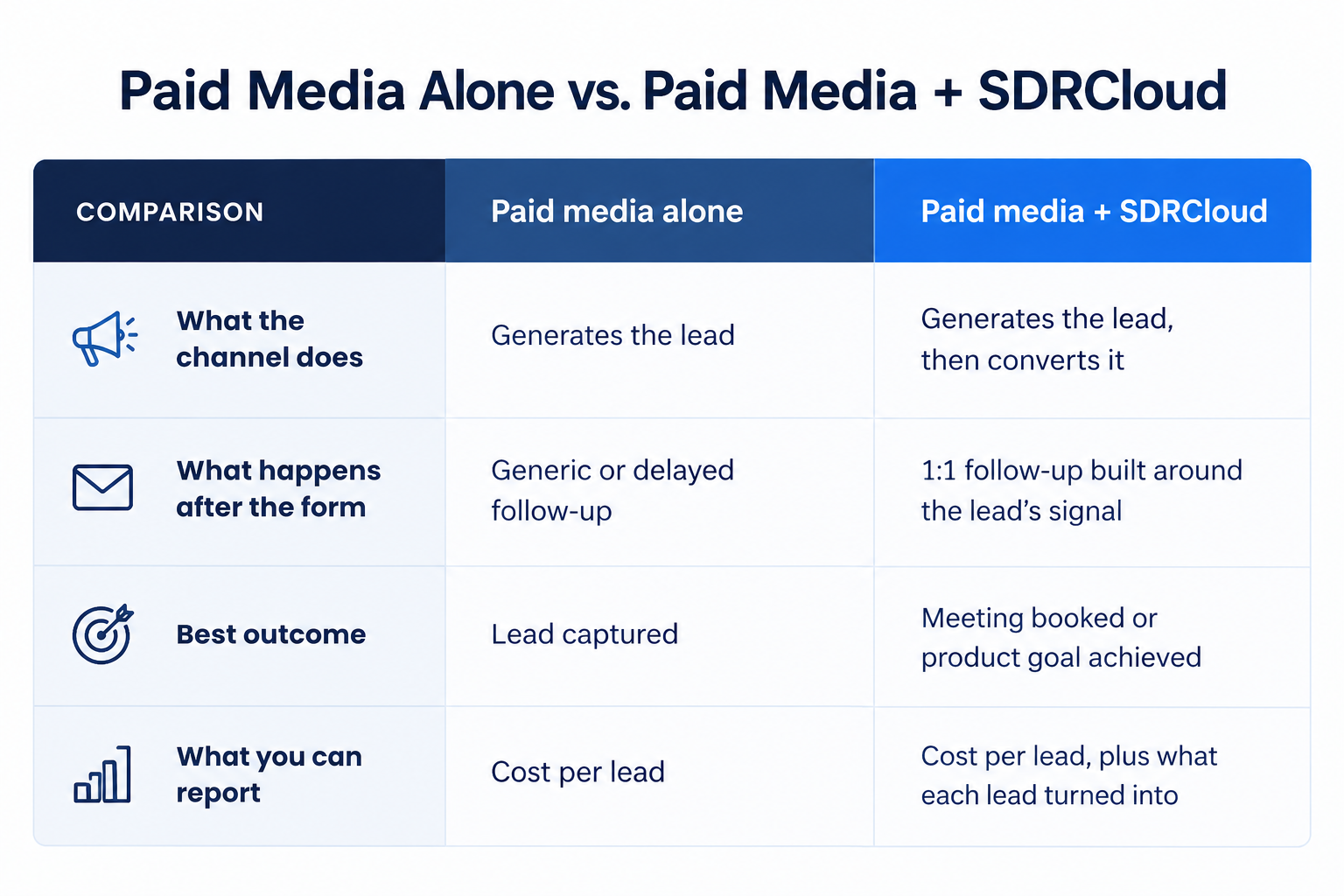
The campaign did its job. Ad platforms optimize for lead generation, and they’re very good at it. But a lead isn’t a meeting, and what happens in the hours after the form submits is where most of the spend is won or lost.
The ads generated the lead. Nobody was assigned to what happens next.
The Gap After the Form Fill
Every paid media manager knows the handoff. A form submits, and the lead lands in a CRM or a spreadsheet. From there the follow-up is usually one of three things:
- A generic autoresponder, identical for every lead and every offer
- A manual follow-up that depends on a rep getting to it
- Nothing, until someone notices the lead is two weeks old
None of those reflect why the person raised their hand. They responded to a specific ad, a specific offer, and a specific moment. The follow-up treats them like a name on a list.
What SDRCloud Does With the Lead
SDRCloud connects to the leads your Meta, LinkedIn, and Google campaigns already generate. When a lead form submits, SDRCloud agents follow up with outreach built around that lead:
A form fill triggers the Asset Factory. The lead’s answers and the offer they responded to become the signal.
A 1:1 landing page is built for them. It speaks to their situation and the thing they asked about, not a generic thank-you page.
A 1:1 video delivers the human touch. It’s a short, specific message, not a mass email with a name inserted.
A multichannel follow-up runs around it, starting with email, with the landing page and video as the destination.
The goal is the outcome you’re paying for: a booked meeting, or a product-led goal such as a signup or activation.
Paid media creates demand. SDRCloud converts demand into pipeline.
What the Lead Receives
Take a lead who fills out a LinkedIn lead form for a demo offer.
- Within minutes, they get an email that references the offer they responded to.
- They click through to a landing page built around their role and the problem they signaled.
- A short video speaks to that specific situation and gives them a clear next step.
They were curious a moment ago. They now have a reason to reply, book, or sign up while that curiosity is still fresh.
What’s In It for You
- A better answer to “are these leads any good?” When leads get worked quickly and specifically, you stop arguing about lead quality and start looking at conversion.
- Spend you can defend. Cost per lead only tells part of the story. Reporting on meetings and product goals shows what the budget actually produced.
- Less leakage after the click. The leads your ads already paid for get a real follow-up instead of a generic one.
- A clearer view of which campaigns convert. Over time you can see which ads and offers produce meetings, not just forms.
- No new headcount to chase leads. SDRCloud agents work the leads you already generate.
- Room to scale spend with more confidence, because the follow-up isn’t the bottleneck.
Judgment Stays With Your Team
Following up on a lead is a first impression, so nothing runs unchecked:
- Every campaign runs through Sim Lab before it reaches a real lead.
- Replies and anything ambiguous surface in the HITL inbox for a person to review.
- Every agent sends from its own inbox with capped volume, so your domain isn’t pooled with anyone else’s.