The ABM Problem Nobody's Solving: You Have the Data. You Don't Have the Conversations.
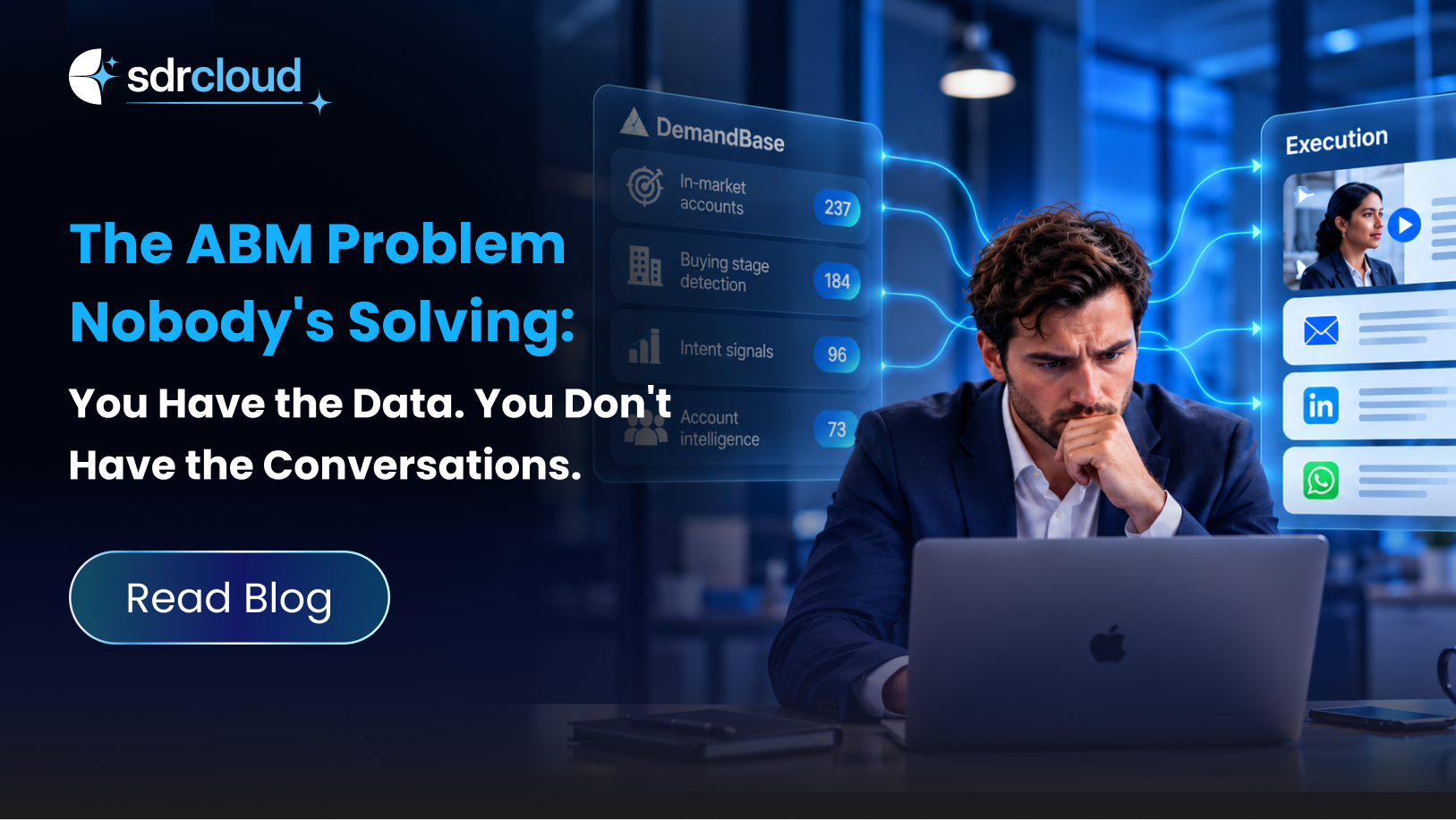
If you're running ABM on DemandBase, you're not short on signal. Account intelligence, buying-stage detection, intent data pulled from across the web, all of it converging into a picture of exactly which accounts are in-market and exactly when. The platform side of ABM has gotten genuinely sophisticated. The problem almost nobody talks about openly is what happens after the signal fires.
Most teams take that intelligence and route it into the same execution motion they'd use for a cold list: a sequence, a template, a merge field for company name. The signal told you something specific just happened. The email that goes out treats it like nothing happened at all. That gap, rich data in, generic execution out, is the actual bottleneck in most ABM programs today. It's not a targeting problem. DemandBase already solved targeting. It's a conversion problem: turning a signal into something that reads like someone actually understood it.
DemandBase's own orchestration and outbound capabilities inside DemandBase One are a reasonable answer to part of that gap, and it's worth being fair about what they do well: they're native to the platform, they can trigger sequences directly off account intelligence without a handoff to a separate tool, and for teams that want signal-to-send without leaving the ecosystem, that's real value. But there's a structural ceiling to what an orchestration layer built around sequencing can produce, and it's worth naming plainly instead of glossing over it.
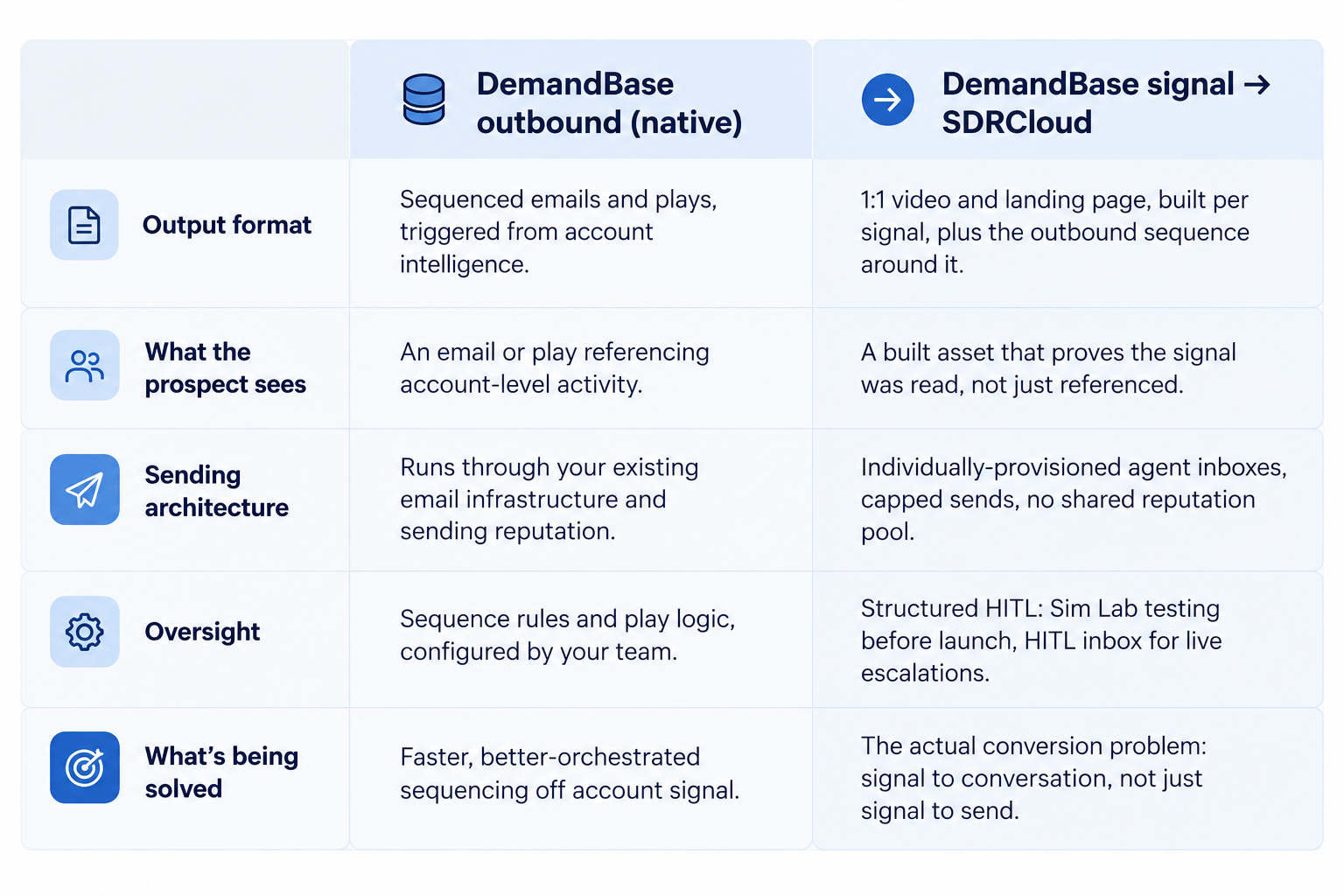
The core difference isn't sequencing sophistication. It's asset type. A sequence, however well-orchestrated, is still a series of emails: text in an inbox, competing with everything else in that inbox, asking the recipient to imagine the specificity rather than see it. A 1:1 video and landing page, built for that exact signal, is something the recipient can watch and click through, and its existence is itself the proof that someone, or something, actually processed what DemandBase surfaced about them. That's a different kind of first impression than a well-orchestrated sequence.
This isn't an argument for replacing what DemandBase already does inside your ABM motion. Account intelligence, buying-stage detection, intent signal aggregation, that's the layer that tells you who and when, and it's the reason the signal exists to act on at all. What SDRCloud adds is the layer DemandBase's orchestration wasn't built to be: the execution engine that takes what DemandBase surfaced and turns it into something a prospect experiences as a real conversation starter, not a well-timed sequence.
Think of it as the difference between knowing exactly which account just entered a buying stage and knowing exactly what to put in front of that account's buyer in the next ten minutes that would make them want to respond. DemandBase answers the first question better than almost anything on the market. SDRCloud is built specifically to answer the second one.
If your team is already sitting on DemandBase data that's more sophisticated than what your outbound execution is doing with it, that gap is the actual growth lever most ABM programs are leaving unaddressed. The signal was never the hard part. What you do with it in the next email is.