The Relationship Debt Every Growing Business Is Carrying — And What to Do About It

There’s a moment many founders experience quietly.
You look at your customer list — hundreds, maybe thousands of names — and realise something uncomfortable: there was a time when you knew nearly every customer personally. You remembered their goals, their frustrations, the last conversation you had. Today, many of those names feel abstract.
Not because you stopped caring. Not because growth was a mistake.
In fact, growth is the success story. The business worked. More customers came. The company scaled.
But somewhere along the way, something valuable was traded: the depth of customer relationship that made the business worth growing in the first place.
This isn’t a failure of care. It’s a failure of infrastructure. The intention to maintain meaningful customer relationships never disappeared. The systems required to do it at scale simply never arrived.
What the Early Relationship Actually Was
In the early stages, customer relationships often feel remarkably natural.
You know context. You remember details. You communicate in ways that make customers feel seen because, at that stage, they genuinely are. You notice subtle signals. You respond personally. Customers trust not just your product, but your presence.
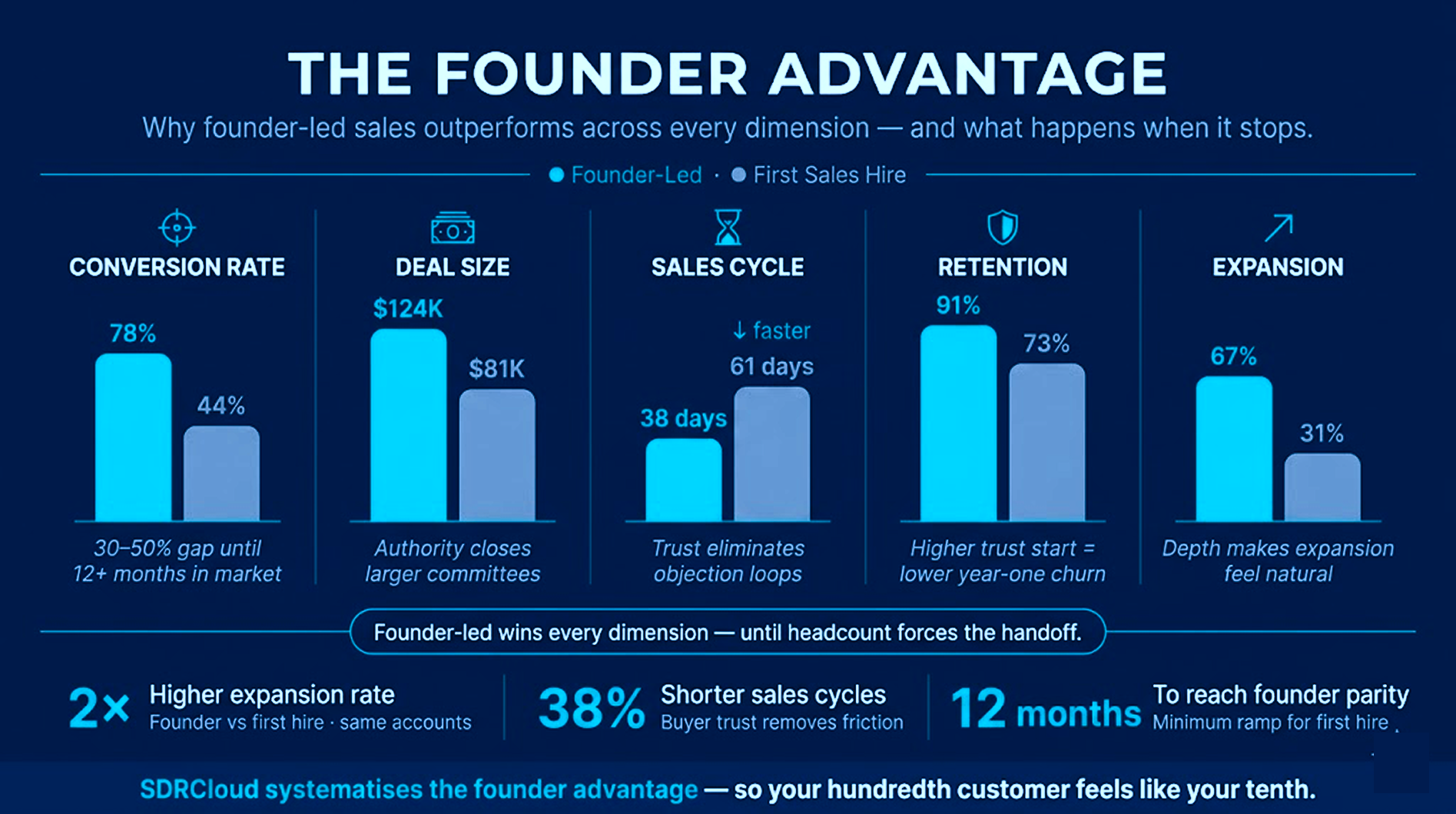
This relationship creates more than goodwill. It drives the business outcomes every founder and investor values most:
- Retention that feels effortless
- Expansion that happens naturally
- Referrals that arrive without being engineered
The early founder-customer relationship is not sentimental nostalgia. It is often the operating engine behind strong metrics.
And when that relationship thins, the numbers eventually reflect it.
The Three Moments Customers Feel the Gap
1. Renewals Get Harder
What once felt obvious now becomes negotiable. Customers who renewed easily begin asking for business cases, additional validation, or more justification.
Often, the product didn’t change. The relationship did.
2. Expansion Stops Happening Naturally
Customers who may have once grown with you simply plateau. Not because they lack need — but because nobody knows enough about their evolving world to open the next conversation in a meaningful way.
3. Customers Leave Quietly
Sometimes churn doesn’t arrive dramatically. It arrives silently. A once-engaged customer simply doesn’t renew.
By the time the churn signal becomes visible, the relationship may have been fading for months.
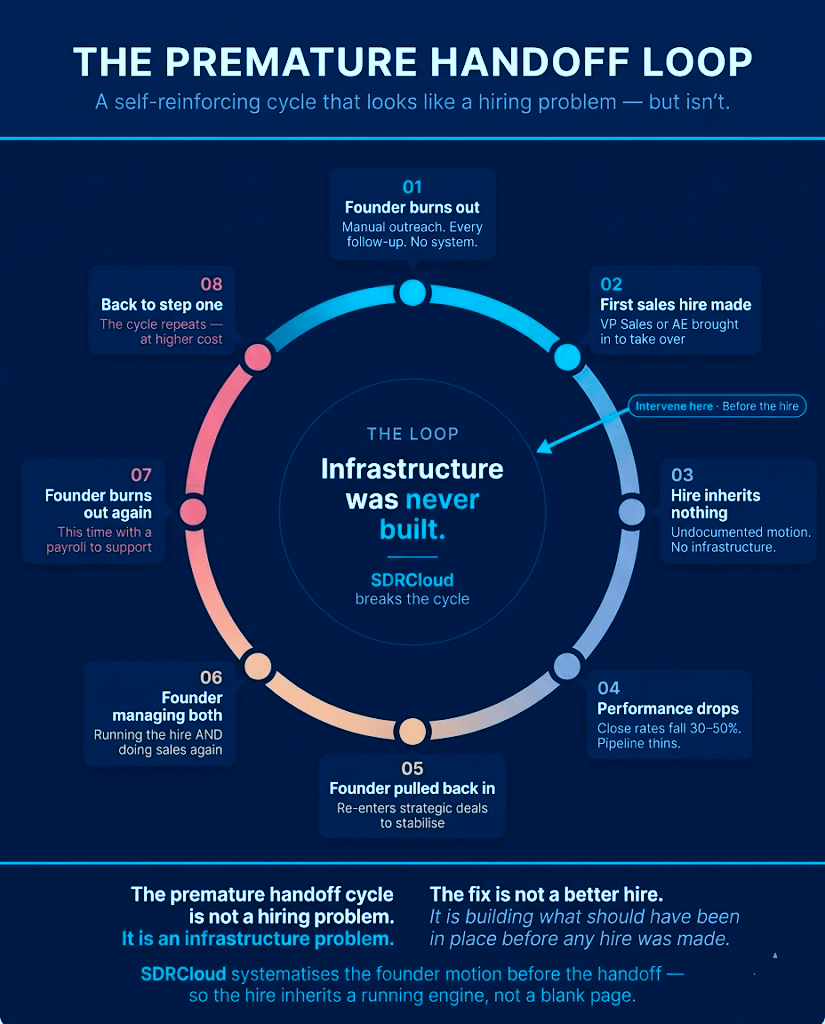
These moments often appear as business issues: retention, upsell, churn.
But underneath, they are usually relationship issues.
Why Traditional Responses Don’t Work
Most growing businesses respond to relationship erosion in two ways:
- Hire more account managers
- Invest in customer success platforms
Both can help operationally. Neither solves the core problem.
More people can manage more accounts, but they rarely restore founder-level relationship depth.
Platforms surface customer data, but data visibility alone does not create meaningful communication.
The problem is not simply headcount or analytics.
It is the inability to communicate with customers individually, personally, and consistently at scale.
This is a communication infrastructure problem — and more of the same rarely closes it.
What Changes When the Asset Factory Runs Customer Communications
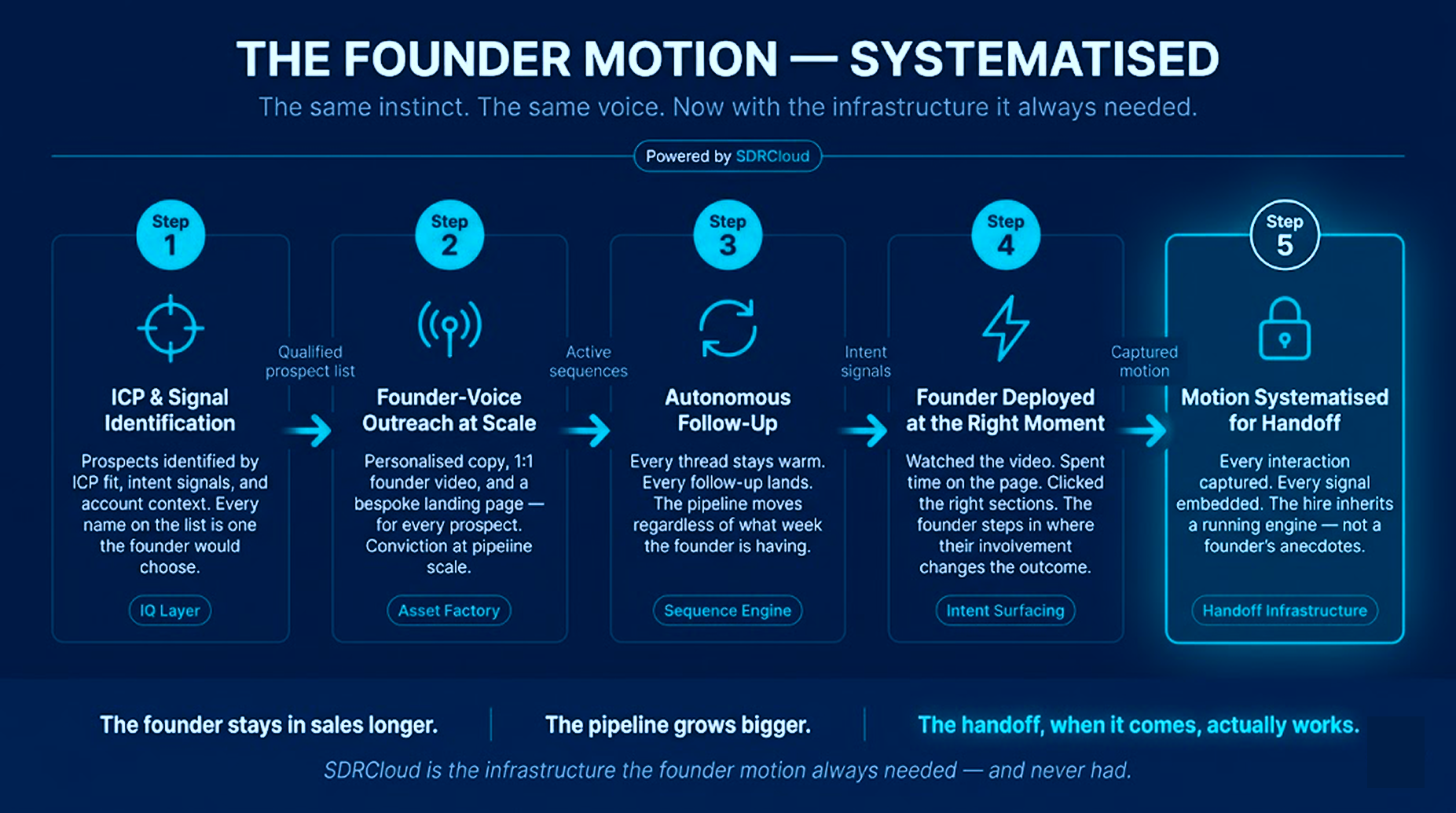
When the Asset Factory becomes the infrastructure behind customer communication, something fundamental changes.
The founder’s presence no longer disappears with growth.
Every customer can receive communication that feels deeply personal:
- A founder video addressed by name
- A dedicated page reflecting their account, history, and next milestone
- Outreach triggered by real engagement, not generic automation
This doesn’t replace human relationships. It systemises the quality that made those relationships powerful in the first place.
The result is that customer intimacy no longer has to decline as customer count rises.
The relationship scales with the business.
The businesses that maintain founder-quality customer relationships as they grow are not simply “better at customer success.”
They make a deeper commitment: they refuse to accept relationship decay as the inevitable cost of growth.
When infrastructure finally matches intention, growth no longer creates relationship debt.
Customers still feel known. Renewals stay predictable. Expansion grows from trust. Advocacy becomes natural.
Growth was never supposed to mean becoming less personal.
It only felt that way because the systems weren’t built for anything else.
Now they are.