What If the EDM Was Invented Today?
Email newsletters have earned their place. They’re direct, owned, and reliable. They build habit, audience connection, and brand rhythm in ways few channels can.
But if we were inventing the EDM today — with AI, deep personalisation, and modern audience expectations — would we build it the same way?
Probably not.
The traditional EDM assumes one version of a brand message can serve everyone on a list. That was once a technological necessity. It no longer is.
This isn’t about replacing email. It’s about rethinking what email can become.
What the EDM Got Right (and What Got Frozen)
Email remains one of the highest-ROI channels in marketing because it works. It’s resilient, direct, and brand-owned.
Over time, marketers improved the format:
- Better design
- Smarter segmentation
- Mobile optimisation
- Automation
- AI-assisted copy
But while the tools evolved, the model stayed largely the same: one brand, one message, sent to many.
The channel is still powerful. The architecture behind it is simply outdated.
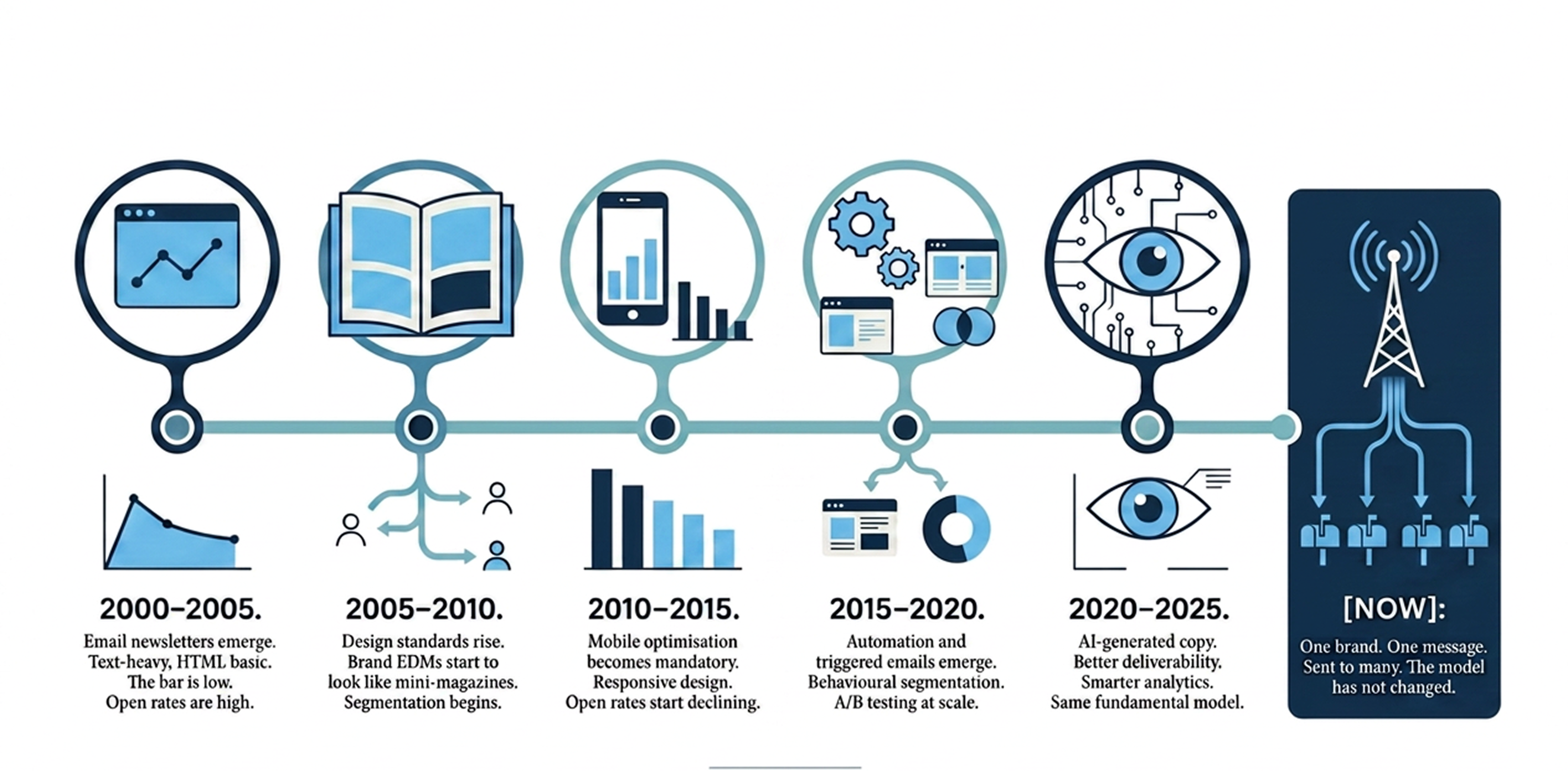
Every improvement in the last twenty years made the same EDM better. Nobody asked whether the EDM itself needed reimagining.
The Personalisation Illusion
Most EDMs call themselves personalised because they include a first name, a segment, or a few dynamic blocks.
But true personalisation is deeper than that. It means the recipient feels like the experience was genuinely built for them — based on their behaviour, preferences, and relationship with the brand.
Most brands already have the data to do this. What’s missing is the infrastructure.
Today’s EDMs often know more about their audience than they actually show.
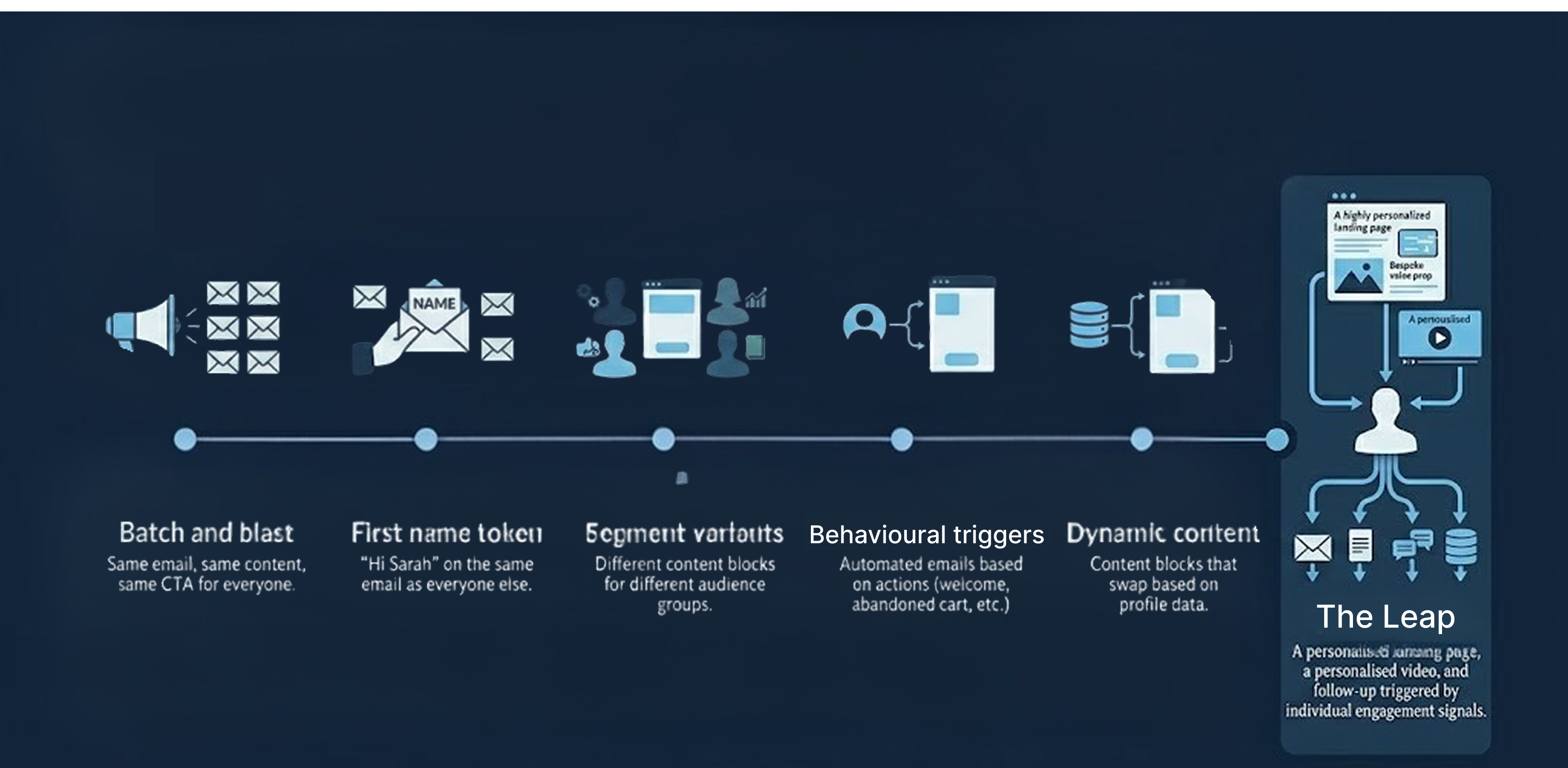
Most brands are operating between points 2 and 4. The leap to point 6 is not incremental. It is architectural.
What the Reimagined EDM Actually Looks Like
In a reimagined model, the email becomes the starting point — not the full experience.
The recipient still receives a polished, branded email. But every CTA and content path leads somewhere built specifically for them.
That might include:
- A personalised landing page
- A 1:1 video
- Content tailored to their history
- Follow-up triggered by their individual engagement
Instead of a static newsletter, the EDM becomes the gateway to a personalised brand journey.
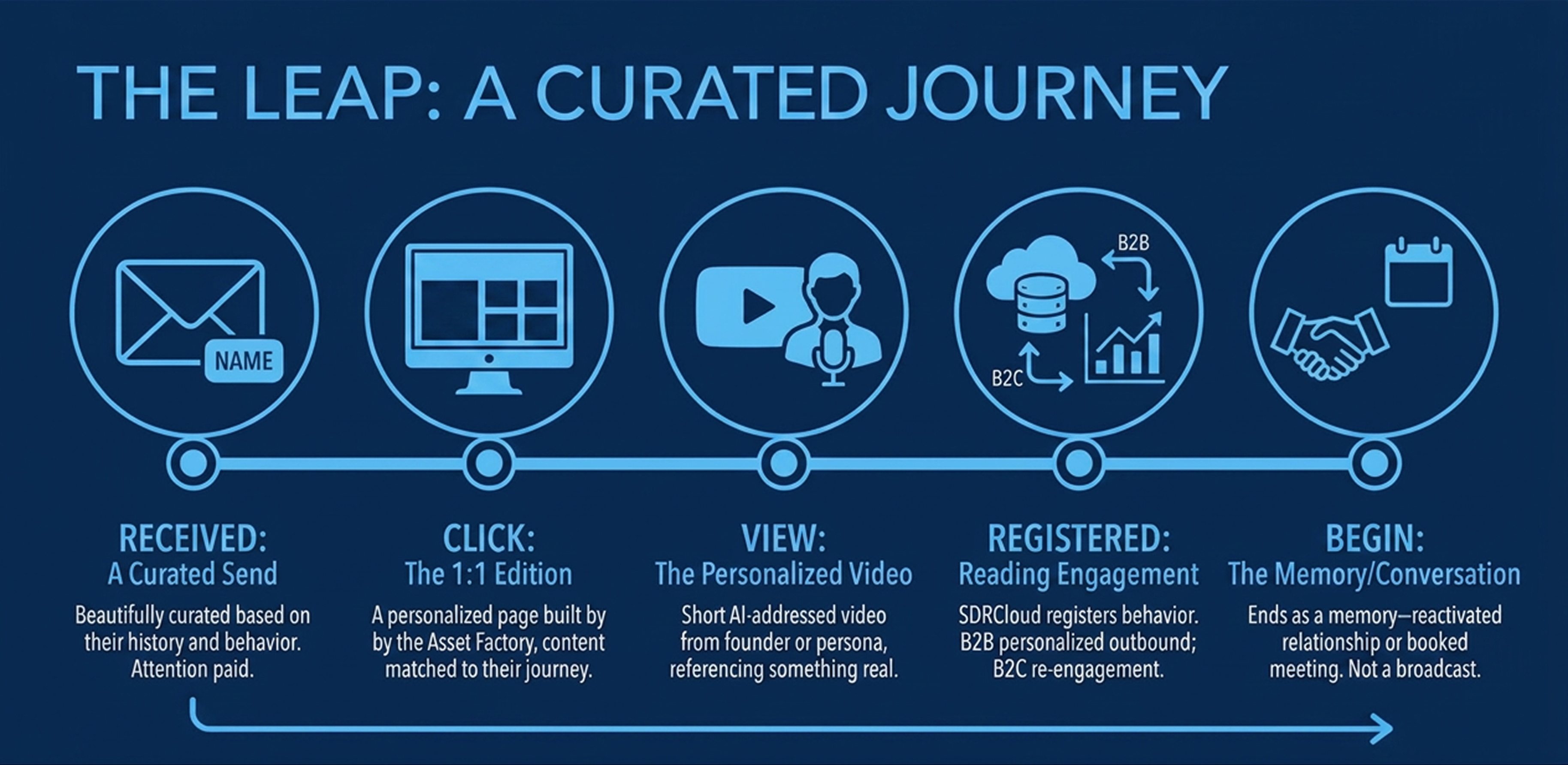
This is what the EDM looks like when it's built for the decade we're actually in.
Why This Matters for B2C and B2B
For B2C Brands:
Personalised EDMs create stronger loyalty, repeat purchases, and emotional relevance. They help customers feel recognised rather than marketed to.
For B2B Brands:
A reimagined EDM can move beyond education into pipeline generation. Engagement becomes actionable, triggering sales and outbound activity based on real interest.
Same channel. Different outcomes. Shared infrastructure shift.
The Asset Factory: What Makes This Possible
For years, brands couldn’t personalise at this level because it simply wasn’t scalable.
Creating unique landing pages, videos, and journeys for thousands of recipients was operationally impossible.
The Asset Factory changes that.
It makes large-scale, 1:1 EDM experiences possible — automatically, on-brand, and contextually relevant.
This is what transforms the idea from an interesting concept into a practical campaign model.
The EDM doesn’t need replacing. It needs reinvention.
If you were building your email strategy from scratch today, knowing everything now possible with AI and personalisation, would you still design it the same way?
Brands that answer honestly — and act on that answer — will create experiences audiences actually notice.
Everyone else may keep improving the same model, while wondering why engagement keeps getting harder.